
Hayk Nahapet – 2492

Hayk’s descendants were the Aykids, a line of legendary kings and dynastic rulers of Armenia. According to tradition, numerous princely families descended from the ancestor Hayk and his descendants. The Khorhorunis took their lineage from Khori, and from Manavaz – Manavazian, Beznunian, Basen, Warduni. Also from Hayk and his descendants came the lineage of the Sisaks, Bznunis, Mandakunis, Angekhea, Varajnunis, Apakhunis, Arranshahs and others.
Arius Hayk’s Saying
Aregnaz placed the newborn Hayk in a separate room and did not allow anyone to come near her. She fed him with great care, gradually accustoming him to air, water, sound, light and sun. Only Torgom had the right to approach her son and admire him.
Haya – Aregnaz cried secretly from Torgom. Wanting to leave her son something in her memory that could comfort him in difficult times, she planted a tree.
Forty days passed, it was time to initiate Hayk . Early in the morning, Torgom invited the Immortal Gods and the spirits of the ancestors to the feast. She glorified the gods, then called on the Creator. Father Ara, your children have gathered to sing this holy hymn to the glory of your creation, to confirm Hayk’s Aryan origin.
He dipped Hayk in a font anointed with the nectar of Ararat flowers, then raised him up and continued.- ABOUT. Our Father Ara, I have sanctified the body of your child with the nectar of Ararat flowers and trust in life and your fatherly care.
Then Aregnaz hugged Hayk and approached the Mother of God Anahit.- ABOUT. Mother Anahit, mother of all Aryan mothers, mother of the Earthly God, Aria, with this holy dedication I entrust to you my only child. Protect my orphan Hayk, take care of him and save the tree that I planted in honor of his birth. And may Hayk rest under this tree in difficult times, be comforted and see happy dreams under your protection.
And Mother Anahit anointed the Sun Cross, hung it around Hayk’s neck and said: – May this Sun Cross, sanctified by my motherly love, always shine on his chest. I will always be present in little Hayk’s dreams, I will sing a lullaby and take care of him so that he does not feel orphaned.
Then Torgom turned to the Almighty Vahagn: – O Great Vahagn, Aryan God, You are the Sun of the world, You are life and movement, You are strength and power, You are light and purity, You are the creator of glory. You are the conqueror of all darkness, a demon, a Dragon, a conqueror of Evil, You were born from the dawn of the morning, I give you the offspring of your earthly brother Arya, Hayk from the Mana tribe.
And Vahagn, having gathered the rays of the Sun into a beam, illuminated Hayk’s eyes with them and said: – May the light of the Sun always shine in Hayk’s eyes, as a manifestation of divine power, and may he always look at the Sun fearlessly. And I give Ayk hope for life and struggle, I give strength and light, I establish faith in his soul, I give power to his fist, I weave his gaze from lightning, I sow fragments of the Sun in his heart, so that he may always be a winner in life.
And Torgom turned to the holy ancestors. – Oh, our holy ancestors, immortal souls of the Earthly Gods, who came from eternity and are going towards eternity. In eternity, Ayk was created by you. And he came from eternity, from the Creator himself, and there is an eternal fire in him. With this holy dedication, I entrust you, little Ayk, take care of him.
And the ancestors took turns kissing Hayk’s forehead and saying: — We sanctify Hayk with the rays of our glory, so that he may forever preserve our love within himself, so that he may merge with us in spirit and always feel within himself the strength of his ancestors and the power of his descendants.
And all together glorified the Creator and drank to Hayk’s health. And they sang and danced until sunset. And after sunset the Gods said goodbye and departed, the spirits of the ancestors said goodbye and departed, Torgom and Aregnaz said goodbye to Hayk and died.
Hayk — The first eponym of the Armenians
Khorenatsi (I, 10-11), referring to his sources, the book of Mar Abbas Katin and folk tradition, describes the ancestor and first namesake of the Armenians, Hayk (Hayk).
He proudly rose up against the tyranny of Bel (Nebrot-Babylon) at a time when the human race was spreading across the entire width of the globe, in groups of incredibly stupid strong people, giants.
After the destruction of the Tower of Babel, he refuses to submit to the Babylonian tyrant Tyrant Bel, who is identified with Nibrot.
…After the birth of his son Aramayak in Babylon, taking with him about three hundred domestic foreigners and foreigners who had joined them, as well as all the people and property, he sets off for the land of Ararat, which is located in the northern regions.
Bel Babylonian, with an “indomitable and monstrous giant horde,” attacks Hayk. The rivals meet in the south of Armenia.
…Hayk places Armayak with his two brothers on the right, and Cadmos (Armayak-A.P.’s son) and his two other sons on the left. He himself stood in front, and placed the rest behind. Having formed this triangle, he began to slowly move forward.
Hayk, armed with a bow, rushes forward, approaches the king, draws his bow tightly, hits the chest plate with a wide and three-pronged arrow like a lake; The arrow, passing between the shoulders, pierces the ground. And then the proud Titanid, falling to the ground, gives up his spirit. Seeing such an incredible feat of courage, his hordes scatter in all directions.
Hayk builds a dastakert (private farm) on the site of the battle, that is, the “settlement”, and in honor of the victory in the battle, he gives it the name Hayk (“Armenians”, “Armenia”). That is why the gorge is now called “Hayots Dzor” (“Armenian Gorge”). The constellation Orion (Haykn) and the planet Mars are also named after Hayk.
Hayk Nahapet-Ayk Nahapet
Hayk (Hayk: Հայերեն) or Hayk Nahapet (Armenian: Հայերեն Հայերեն), Hayk Dyutsazn (Armenian: Հայերեն Հայերեն), is the mythical ancestor of the Armenian people, as well as the founder of the legendary Aykazuni dynasty. According to Christian tradition, he is a descendant of the biblical Togarmah.


According to Christian tradition (quoted by the author of “History of Armenia” Movses Khorenatsi), the descendant of Noah, Hayk (Hayk), raised a rebellion in Babylon against the tyrant Bel and returned to Armenia, restoring the Armenian kingdom.
Hayk (2492) – Patriarch of Armenia, founder of the Haykazuni dynasty.
According to the traditional Armenian calendar, he lived in the 26th-25th centuries BC. On August 11, 2492, he won the Battle of Dyutsaznabat against the tyrant Bel of Mesopotamia.
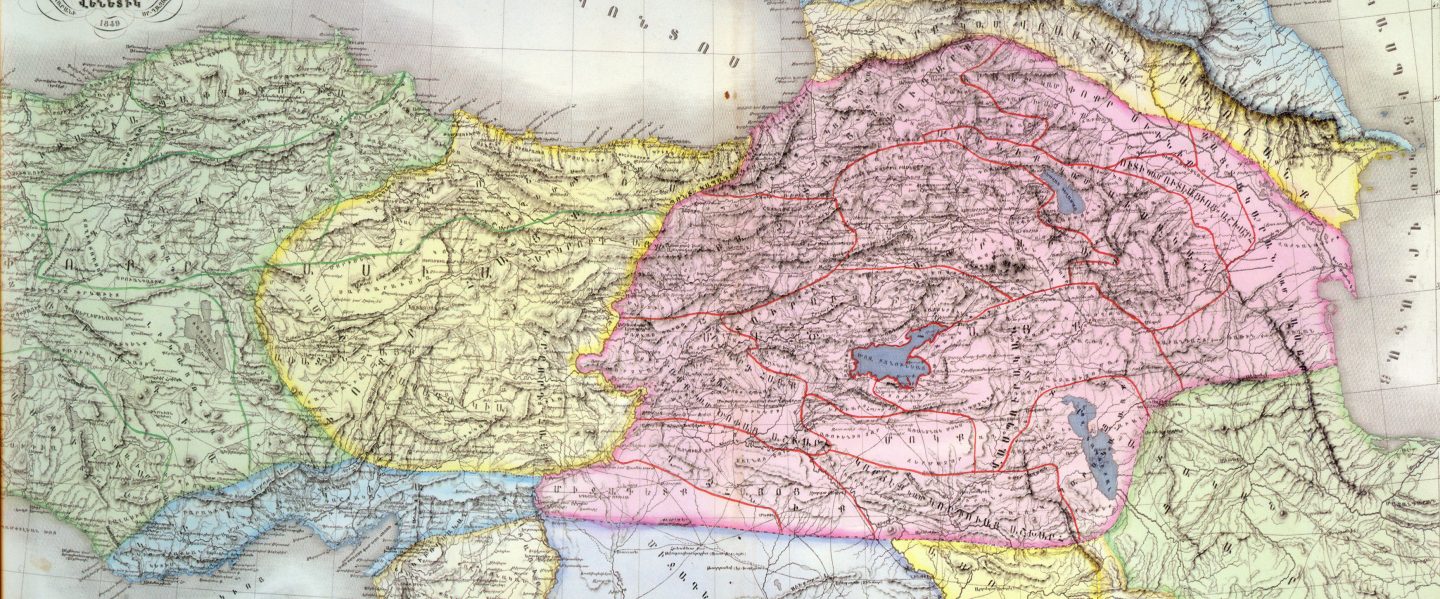
Below we present the years of the reign of Mikael Chamchyan’s “Chronological Table”, which do not always coincide with the Armenian calendar (from the date of the Battle of Dyutsaznabat). Legend According to ancient Armenian mythology, the self-name “Armenian” of the Armenians originated from the name of the giant Hayk. According to tradition, Hayk crossed the Van River from Mesopotamia in the summer of 2492 BC[2], leading 300 men with their families. Hayk founded the Armenian state and drew its borders around three lakes: Van, Urmia, and Sevan, all of which together formed Mount Ararat. The tyrant Bel, the ruler of Babylon, invaded Hayk’s kingdom, and on August 11, 2492 BC, a battle took place between them in the city of Hayots Dzor (literally, “Hayk’s Valley”). In this battle, Hayk killed Bel with a bow and arrow. Bel’s body, killed by the Armenian king, was raised to the top of the mountain and burned. By the will of God, the ashes left by him turned into water, and Bel’s warriors and his camel caravans turned to stone with fear. Hayk became the founder of the Armenian kingdom. He himself is deified by the Armenians, and the people begin to call themselves “Hay”, emphasizing their lineage from the mythical giant. Before his death, Hayk grants power in the country to his eldest son, Aramanjak. From the name of one of his great-grandsons, Aram, various derivative forms have arisen, by which this people is called by their neighbors: Armani, Armenians, Armeni, Arim, Ermeni, etc. August 11 is considered the beginning of the national holiday calendar for Armenians, and this day is still the national holiday of Navasard, the Armenian New Year.


The descendants of Hayk Hayk were the Haykids, a family of mythical kings and rulers of Armenia.
According to tradition, numerous princely families descended from the ancestor Hayk and his descendants. The Khorkhoruni family was from Khorit, and from Manavaz – Manavazian, Beznunian, Basen, Varduni (there is an opinion that all three of these families died in civil wars after Trdat, with the exception of the Basens, who were previously called Pasyans). The Sisaks, Bznunis, Mandakunis, Angegheya, Varajnunis, Apakhunis, Aranshahs and others also followed from Hayk and his descendants.
The meaning and interpretation of legends The tradition contains a number of facts and people associated with Urartu. Hayk Nahapet is sometimes identified with the god Khaldi. Khorenatsi interprets the founding of Van by the Urartian king Semiramis[8] of Aram in the context of Armenian history. This interpretation of the “history of the Araratian world” was widely accepted in later centuries: “From the lineage of Hayk, from his descendants, Aray was born, the Armenian nickname Gegeksik, that is, beautiful or handsome. In his memory, the highest mountain in Armenia, Ararat, was named after Aray, and the most famous is the country of Araunt, the state of Armenia.”
— (pp. 26-27) Professor B. A. Harutyunyan identifies Aram described by Khorenatsi with Hayk Nahapet, the “Armenian king of Erimene-Aramani.” Instead, Armenia is called by his name as a synonym.
According to the Holy Scripture, different peoples participated in the construction of the world-famous Tower of Babel, performing similar functions: one was a craftsman, one was a builder, one was a mason, one was a translator.
It is noteworthy that at the height of the construction of this great tower, the chieftain Hayk with his people, leaving Babylon, went north to the salt lake of Van. However, the ruler Bel, the king of Babylon, received this departure very unfriendly and, leading an army of 60,000, marched.
Accepting the challenge, Hayk went with his army on August 11, 2492 BC and uttered his famous speech, Mesilim-Bel, with a three-feathered arrow. (Nebrovda).
This historical scene is described as follows: “He draws the bow tight, like a lake (bow) and strikes the breastplate with a trident (arrow), the arrow, passing through the shoulders, pierces the ground. And then the proud Titanide, crashing into the ground, gives up his spirit.” Seeing such an incredible feat of courage, his hordes scatter. After the death of the king, the Babylonians begin to flee in panic, and the Armenians pursue them to the borders of Lake Van.
However, after this, the question arises: for what purpose did Bel try to bring back Hayk and his people, for which he died? It is worth remembering that during the construction of the Tower of Babel, each nation carried out its own activities, and people were needed who could translate the words of different nations into each other.
Here is what the Hayk people did. It is known that Hayk’s father was Torg. Perhaps the name of the profession “Targmanich” comes from his name, which means translator in Armenian.
It was here that Armenians served as translators between different nations, and when the translators left for their homeland, no one understood anyone, and it became necessary to return them to complete the great Tower of Babel.
However, the creative people did not want to return and serve the blasphemous tyrant, whose idea was to build the highest tower in order to physically communicate with God, because they believed that one should be in spiritual connection only with Him, and that one cannot accept infinity.


You must be logged in to post a comment.